

From the moment we open our eyes in the morning until we close them at night, we find ourselves interacting with dozens of different apps—from tracking the news to completing purchases, and from communicating with friends to managing businesses. These applications have transformed from simple entertainment tools into an essential partner in organizing our personal and professional lives. In this article, we will take you on a comprehensive tour to understand the world of Mobile Phone Applications, their types, development stages, and how to choose the right tech partner to build a successful app.
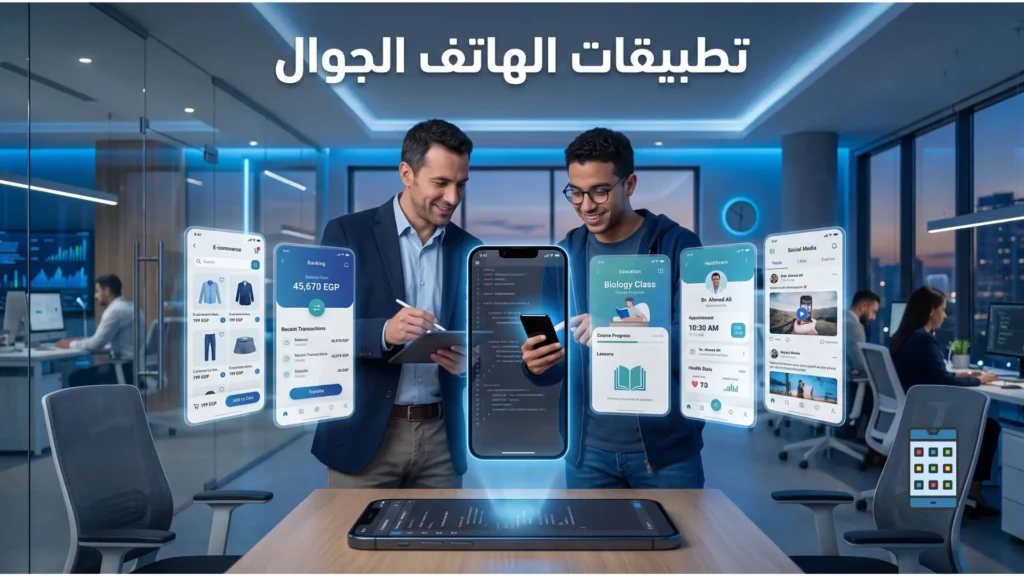
Mobile Phone Applications
Mobile Phone Applications are software programs specifically designed to run on smartphones and tablets, whether powered by Android or iOS. These apps differ from traditional websites in that they are engineered to leverage the device’s native hardware capabilities, such as:
- The camera.
- GPS location services.
- Push notifications.
- Various built-in sensors.
The Importance of Mobile Phone Applications
Saving Time and Effort
Instead of traveling to a company’s headquarters or a bank branch, anyone can now complete financial transactions, book a medical appointment, or order a meal with just a few taps on their phone screen.
Enhancing Customer Communication
For businesses, Mobile Phone Applications serve as a direct communication channel with customers, away from the complexities of other platforms. Instant push notifications can be sent regarding offers and updates, boosting engagement and brand loyalty.
Supporting Small and Medium Business Growth
Apps are no longer exclusive to major corporations; the decreasing cost of development has enabled small business owners to own dedicated apps that help them compete with established market names.
Types of Mobile Phone Applications
Mobile Phone Applications vary depending on their purpose and target audience. Among the most prominent types are:
- Social media apps, which allow users to interact and share content with one another.
- E-commerce apps, enabling users to browse products and complete purchases directly from their phones.
- E-learning apps, including language learning platforms, training courses, and professional certifications.
- Health and fitness apps, helping users track their physical activities and dietary plans.
- Productivity and business management apps, such as task management, calendar, and email tools.
- Mobile banking apps, allowing users to manage accounts and transfer money securely.
- Entertainment apps, comprising streaming platforms for movies and music.
- Government service apps, enabling citizens to process official transactions without visiting administrative offices in person.
Do You Have an App Idea?
Contact Websoft now and get a free consultation to transform your idea into a professional application running on Android and iOS.
💻 Request Free Consultation | 💬 Contact via WhatsApp |
Development Stages of Mobile Phone Applications
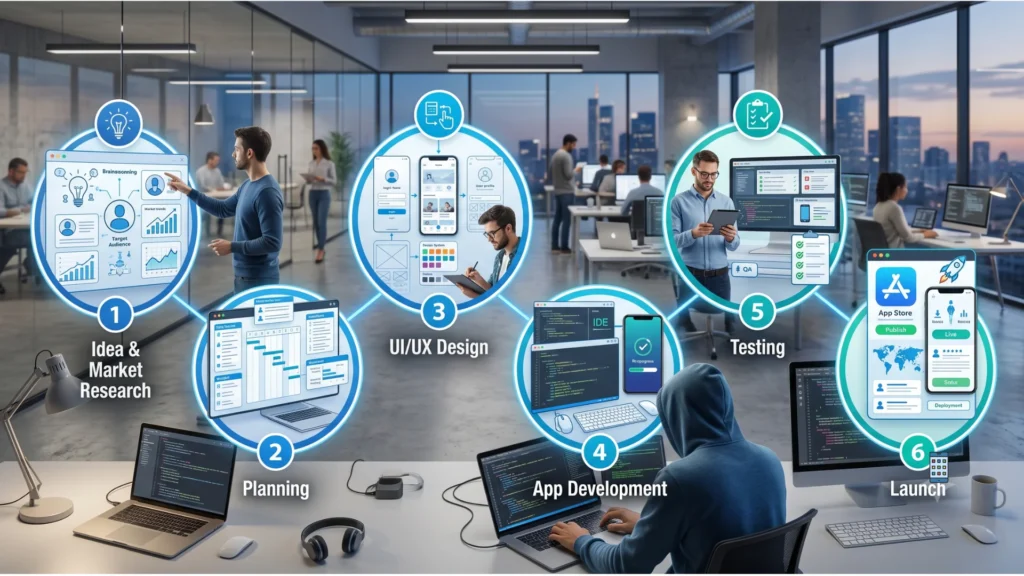
Building successful Mobile Phone Applications requires going through a set of structured stages to guarantee final product quality and alignment with user needs.
Idea & Market Research Stage
In this stage, target audience requirements are analyzed, competitor applications are studied, and the unique selling proposition (USP) of the new app is defined.
Planning & Requirements Gathering Stage
A clear roadmap is established, covering:
- Core features.
- Target platforms.
- Budget allocation.
- Execution timeline.
UI/UX Design Stage
This phase is crucial in app development; an intuitive and seamless user interface keeps users engaged rather than uninstalling the application after the first try.
Programming & Core Development Stage
Here, designs are converted into actual, highly functional Mobile Phone Applications while optimizing for:
- Execution speed and performance.
- Compatibility across various screen sizes.
- Compatibility with different OS versions.
Testing & Quality Assurance Stage
Mobile Phone Applications are thoroughly tested on multiple devices to ensure they are free of software bugs and operate smoothly prior to public release.
Launch & Ongoing Maintenance Stage
After deployment on app stores, post-launch performance monitoring begins along with user feedback collection and routine updates to improve UX and introduce new features.
Difference Between Native, Hybrid, and Web Applications
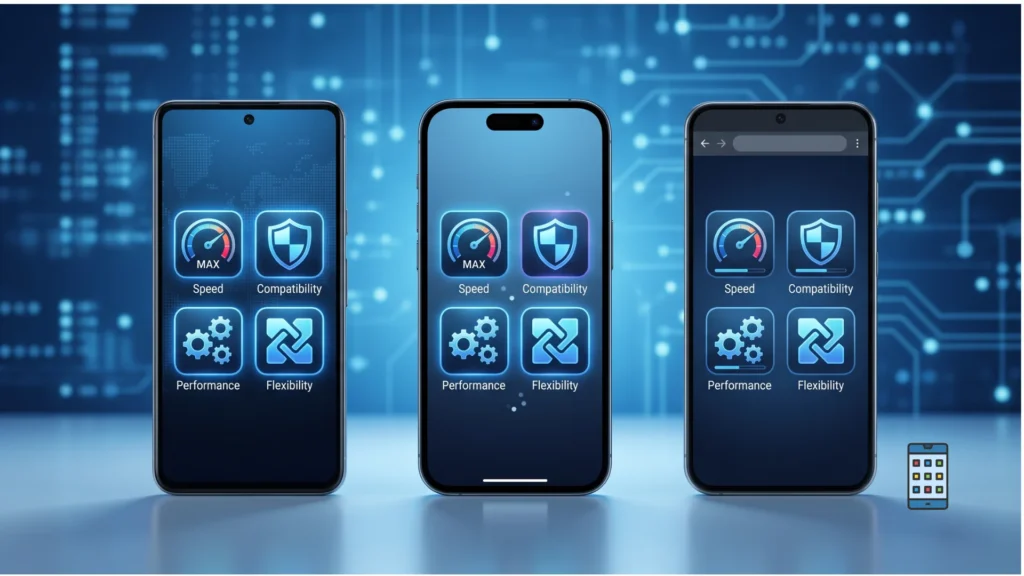
When planning a new application, business owners face a key decision regarding the selection of the right technical architecture.
- Native Applications: Apps developed specifically for a single operating system using its official programming languages, providing the highest level of speed and performance.
- Hybrid Applications: Apps developed once to run across multiple operating systems, significantly saving time and development costs.
- Progressive Web Apps (PWAs): A blend of websites and mobile applications that can be accessed via a web browser without requiring a download from an app store.
Choosing the right type depends on your project requirements, available budget, and target audience. It is essential to consult an expert agency capable of offering precise technical advice before starting development.
Key Metrics for Mobile Phone Application Success
The success of any app is measured by long-term user retention. Primary factors influencing this include:
- Ease of use: Simple and clear user interfaces increase user engagement.
- High performance speed: Modern users expect immediate responses without lag or freezing.
- Security and data protection: A top priority amidst growing digital cybersecurity threats.
- Cross-device and screen size compatibility.
- Regular updates that deliver real value and fix technical glitches.
- Accessible technical support to respond to queries and resolve issues quickly.
Major Challenges Business Owners Face When Developing a New App
Despite the immense opportunities offered by mobile apps, the road to successful Mobile Phone Applications comes with key obstacles, including:
- High competition in Mobile Phone Applications and the difficulty of standing out to users.
- Costs associated with continuous development and ongoing maintenance.
- The need for a full technical team combining developers, UI/UX designers, and quality engineers.
- Keeping up with OS updates and app store guidelines.
- Ensuring ongoing cybersecurity as hacking techniques evolve.
These challenges make it essential to partner with an experienced technical agency rather than risking your project budget with unspecialized providers.
How to Choose a Reliable Mobile App Development Company
Selecting the right app development company is one of the most critical decisions for a business owner; execution quality directly impacts end-user experience and market success. Key criteria to evaluate include:
- Reviewing the company’s past portfolio and case studies.
- Checking testimonials and client reviews.
- Ensuring their capability to offer clear tech stack recommendations tailored to your project.
Websoft is a leading firm providing Mobile Phone Applications services professionally, combining technical quality with modern design. Websoft focuses on understanding each client’s precise needs before execution, delivering a final product that drives real business goals instead of a generic application. They stay ahead of application development trends to offer solutions that adapt to evolving market demands.
The Future of Mobile Phone Applications

The world of Mobile Phone Applications is moving toward enhanced intelligence and personalization. Companies have begun integrating artificial intelligence within apps to deliver tailored user experiences. Interest in Augmented Reality (AR) and Virtual Reality (VR) is also rising, especially in e-commerce and education. Over the coming years, we expect to see:
- Greater advancements in in-app digital security systems.
- Increased reliance on AI to refine user experience.
- Broader adoption of Augmented Reality and Virtual Reality.
- Enhanced content personalization for every user.
Practical Tips for Business Owners Before Starting New App Development
Before building a new application, consider the following practical tips:
- Start by defining the exact problem your app will solve for your target audience, rather than copying a competitor’s idea.
- Set a realistic budget covering development, launch, and post-launch maintenance.
- Do not skip QA testing, regardless of pressure to launch quickly.
- Listen to early user feedback and use it to refine upcoming releases.
- Work with a specialized firm that has a proven track record of successful projects instead of unverified solutions.
What Websoft Can Do for You
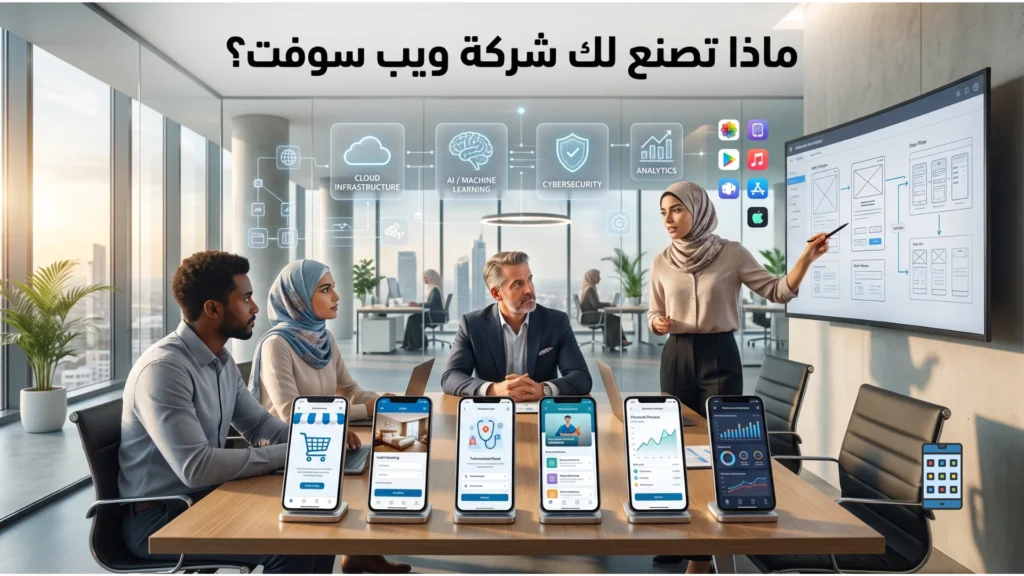
Starting from evaluating your idea and analyzing your project requirements, Websoft turns your concept into a professional mobile application that aligns with your business goals and delivers a fast, seamless UX. This includes crafting modern UI designs, developing cross-platform apps for Android and iOS, integrating databases, payment gateways, and notification systems, accompanied by rigorous QA testing. Websoft also continues to offer post-launch technical support, maintenance, and periodic updates to keep your app compatible with market evolutions and continually improve user retention for long-term growth.
💻 Request Free Consultation | 💬 Contact via WhatsApp |
Frequently Asked Questions
Is it better to develop an app for Android or iOS first?
This depends on your target audience and primary market. Android dominates certain markets while iOS leads in others. It is best to study user demographics before deciding, or consult a specialized agency like Websoft to determine the ideal path for your use case.
Does an app need maintenance after launch?
Yes, regular maintenance is essential to resolve technical bugs that appear post-launch, keep pace with OS updates, and release features that cater to evolving user demands.
How do I ensure user data security within the application?
By enforcing robust encryption protocols for data transmission and storage, performing routine security audits, and regularly updating the app to patch potential vulnerabilities before exploitation.
Can an existing website be converted into a mobile application?
Yes, by rebuilding the user experience to match mobile device interfaces while utilizing existing databases and content, saving time and costs compared to building from scratch.
Conclusion
By collaborating with an experienced technical partner like Websoft, business owners can turn their concepts into successful Mobile Phone Applications that drive business objectives and meet changing market requirements.