

Hosting services and enterprise custom software development in the Kingdom of Saudi Arabia require an environment capable of supporting high loads and providing maximum digital security. Dedicated cloud hosting represents the fundamental pillar for modern software systems, ensuring operational stability, reduced latency, and full compliance with national regulations issued by the National Cybersecurity Authority (NCA) and the Communications, Space and Technology Commission (CST).
Custom Website and System Hosting in Saudi Arabia
Hosting corporate websites and custom systems in Saudi Arabia relies on choosing a reliable cloud architecture that stores data within In-Kingdom Data Centers. This architecture ensures rapid system response due to geographical proximity, while providing advanced Web Application Firewalls (WAF), auto-scaling mechanisms, and DDoS mitigation to ensure 99.99% business continuity.
What is Custom Software Development and How Does It Serve Your Enterprise?
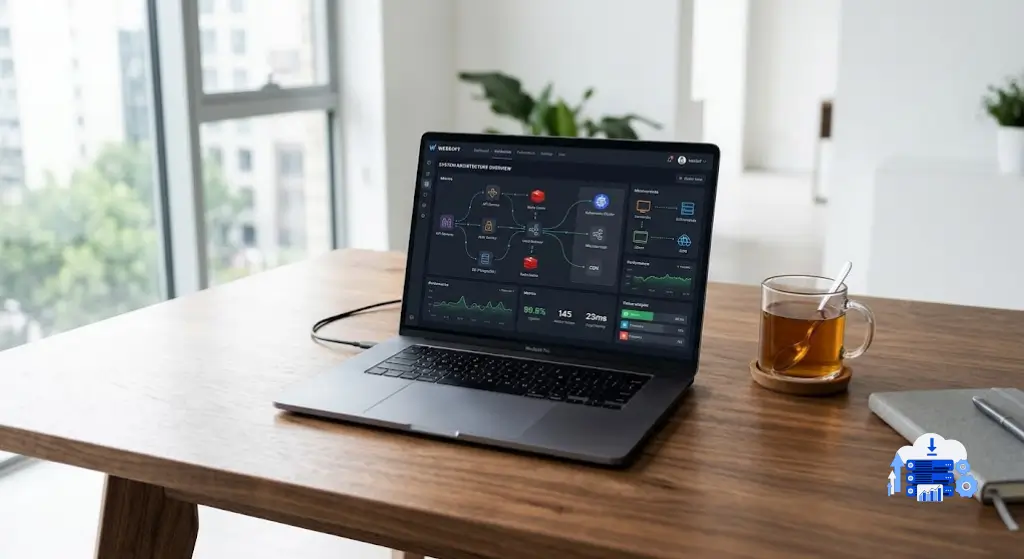
Custom Software Development is the process of building specialized platforms and software applications tailored specifically to meet the precise operational requirements of a particular organization without relying on shared source code. This approach ensures system alignment with internal workflows while achieving complete flexibility in integration via APIs.
+ Auto-scaling Container Orchestration (Kubernetes / Docker)
Custom software enables complete control over source code, enhancing security levels and preventing vendor lock-in. Modern software architecture also relies on dividing services into independent modules (Microservices Architecture), allowing each service to be hosted and scaled separately based on usage pressure, thereby increasing server resource efficiency and lowering long-term operating costs.
When Do You Need Custom Software Solutions Instead of Off-the-Shelf Systems?
The need for custom software and independent hosting becomes urgent when an organization moves beyond standard operations and requires complex data processing or high security integration. Off-the-shelf software deprives the organization of its freedom to develop and imposes restrictions on data sovereignty.
| Comparison Factor | Off-the-Shelf Systems (SaaS) | Enterprise Custom Software & Hosting |
|---|---|---|
| Data Residency | Usually hosted on external public servers | Full in-house hosting inside Saudi data centers |
| Customizability | Limited by provider features and available settings | 100% absolute adaptation to all operational workflows |
| Security & Cyber Compliance | Shared security, limited control over encryption policies | Full compliance with NCA CCC controls, PDPL, and local encryption |
| Software Integration | Relies on limited and changeable REST APIs | Custom API building and direct system integration |
| Performance & Latency | Affected by global pressure on provider servers | Superior performance dedicated to users within the Kingdom |
| Source Code Ownership | Exclusive ownership by the service provider | Complete and absolute ownership by the organization |
To Secure a Cloud Hosting Environment and Develop Your Software Systems
Contact us now for a technical consultation and free infrastructure analysis
The Role of Custom Hosting in Supporting Digital Transformation and Vision 2030

Robust digital infrastructure forms the core engine for digital transformation initiatives and comprehensive economic expansion across the Kingdom of Saudi Arabia. Modern ecosystems across government and private sectors depend on high-efficiency hosting servers capable of processing millions of daily transactions without interruption.
Local hosting compliant with Communications, Space and Technology Commission (CST) regulations elevates the Kingdom’s standing in global digital indices, empowering corporations to process big data and AI applications with ultra-low latency, meeting the demands of major national projects and sovereign digital services.
Tech Stack and Software Architecture at WebSoft
WebSoft builds and manages systems using an advanced tech stack combining high performance with robust security, divided into the following operational layers:
| WEBSOFT TECH STACK ARCHITECTURE | |
|---|---|
| Frontend Layer | React.js, Next.js, Vue.js, Flutter |
| Backend Layer | Node.js (TypeScript), Go, Python, Java |
| Databases & Caching | PostgreSQL, MySQL, Redis, MongoDB |
| DevOps & Cloud | Kubernetes, Docker, Terraform, CI/CD Pipelines |
| Cybersecurity | WAF, Cloudflare Magic Transit, HashiCorp Vault |
1. Frontend Interfaces
- React.js & Next.js: For building high-speed web platforms leveraging Server-Side Rendering (SSR) to enhance browser performance and improve SEO indexing.
- Flutter: For developing mobile applications across platforms with unified source code and native-like performance.
2. Backend and Data Management Layer
- Node.js (TypeScript) & Go: For building lightweight, high-speed APIs capable of handling thousands of concurrent requests efficiently.
- PostgreSQL & Redis: Utilizing PostgreSQL as a reliable, robust relational database alongside Redis as an in-memory caching layer to reduce database query times to under 5 milliseconds.
3. DevOps and Infrastructure Automation
- Docker & Kubernetes: Packaging applications inside containers and managing them via Kubernetes to ensure automated scaling and load balancing.
- Terraform & CI/CD Pipelines: Managing infrastructure as code and activating continuous integration and deployment pipelines for automated testing and zero-downtime releases.
Software Development Life Cycle (SDLC) and Cloud Management Phases
WebSoft follows a rigorous engineering methodology spanning from initial planning to ongoing server operations to ensure final product quality and stability:
- Weeks 1 – 2 (Requirements Analysis & Architecture Design): Defining project scope, studying expected loads, designing system architecture, and selecting suitable hosting environments compliant with local regulations.
- Weeks 3 – 4 (Software Design & UI/UX Building): Preparing wireframes, UX/UI designs, defining API interfaces, and establishing data exchange standards between disparate systems.
- Weeks 5 – 12 (Software Development & Testing Frameworks): Writing source code according to the latest engineering standards, activating unit testing protocols, and conducting security and integration testing.
- Week 13 (Hosting Environment & Server Setup): Configuring hosting servers in local data centers, adjusting WAF, setting up database clustering, and configuring SSL/TLS encryption certificates.
- Week 14 (Stress/Security Testing & Launch Preparation): Executing cybersecurity penetration tests (VAPT) and mass load/stress testing to verify server stability under maximum pressure.
- Ongoing (Live Launch and Technical Support): Deploying the system to the production environment, activating real-time monitoring tools (Prometheus & Grafana), and providing 24/7 technical support under an SLA.
Cybersecurity and Data Protection According to NCA and NDMO Controls
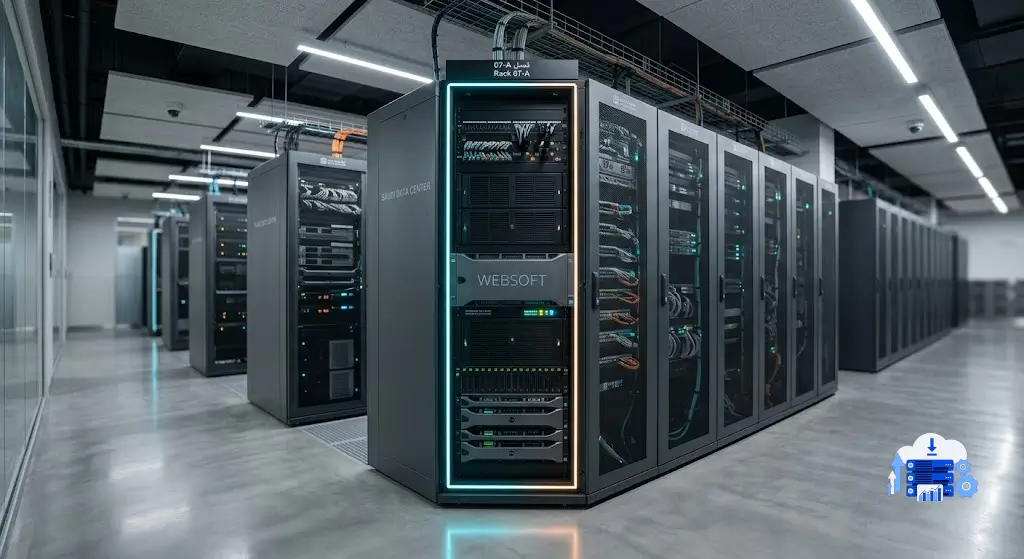
Data protection and adherence to national regulatory frameworks are foundational requirements for operating any software system or hosting platform inside the Kingdom of Saudi Arabia.
| KSA CYBERSECURITY COMPLIANCE LAYERS | |
|---|---|
| NCA CCC Standards | Comprehensive implementation of cybersecurity controls for cloud operations. |
| PDPL Compliance | Full commitment to personal data protection regulations and local data residency within the Kingdom. |
| CST Regulations | Relying on Saudi data centers holding Class C licenses. |
| Data Encryption | Advanced encryption using AES-256 for data at rest and TLS 1.3 for data in transit. |
1. Cloud Cybersecurity Controls (NCA CCC)
WebSoft’s hosting environments comply with controls issued by the National Cybersecurity Authority. This includes strict IAM identity and permission control, complete separation between development, staging, and production environments, and implementing a Zero Trust Architecture.
2. Personal Data Protection Law (PDPL) and National Data Management Office (NDMO)
All sensitive personal and commercial data is stored within the geographical borders of the Kingdom of Saudi Arabia. Storage architecture includes advanced encryption techniques utilizing AES-256 for data at rest and TLS 1.3 for data in transit.
3. Communications, Space and Technology Commission (CST) Licenses
Data management and hosting are carried out on data centers holding CST classifications and approvals under certified categories (Class C) dedicated to corporate, government, and private sectors.
Cost Estimation and Timeline for Hosting Systems and Software Solutions
The cost of website hosting and enterprise software development depends on a set of engineering and operational criteria, making fixed pricing inaccurate without preliminary technical analysis.
- 1. System Complexity and Architecture: Microservices-based systems require special configuration compared to monolithic systems.
- 2. Traffic Volume: Cost is determined based on required memory, CPU, and bandwidth resources.
- 3. Security Levels Required: Adding dedicated WAF and DDoS filtering increases hosting efficiency and cost.
- 4. Service Level Agreement (SLA): Includes 24/7 monitoring services and distributed real-time backups.
Factors Influencing Cost and Timeline:
- Volume of software resources and allocated servers: Number of vCPUs, RAM capacity, and NVMe SSD high-speed storage types.
- Managed Services SLA: Fully managed hosting featuring 24/7 real-time monitoring and automated distributed backups carries higher costs than unmanaged servers.
- Complexity and Software Integrations: Developing systems connected to multiple payment gateways, Sadad, or ZATCA integration raises timeline and cost.
Engineering Errors Committed by Companies When Choosing a Hosting and Development Partner
Decisions not grounded in sound engineering principles lead to financial losses and noticeable operational disruption. Key errors include:
Engineering Warning: Underestimating Database Connection Pooling or direct code deployment without staging environments causes server collapse upon traffic spikes.
- Choosing uncertified external servers: Relying on cheap hosting providers outside the Kingdom breaches PDPL regulations.
- Ignoring Auto-Scaling: Relying on fixed-resource servers causes platform outages during marketing campaigns or peak times.
- Neglecting Off-Site Backups: Keeping backups on the main hosting server exposes all data to total loss during attacks or structural failures.
- Lack of a Clear SLA: Contracting with hosting providers that do not guarantee legally binding uptime percentages backed by delay penalties.
Digital Engineering at WebSoft: The Technical Partner for Critical Infrastructures
WebSoft excels at delivering integrated engineering frameworks combining professional software development with advanced cloud hosting environment management.
- 100% local cloud hosting infrastructure compliant with CST requirements.
- A team of certified cybersecurity engineers and DevOps specialists.
- 99.99% uptime guarantee backed by enterprise SLAs.
- Comprehensive custom software development from concept to operation and integration.
WebSoft possesses a balanced team of software engineers, cybersecurity specialists, and DevOps experts, enabling the construction of high-performance systems and applications hosted within secure local servers. This technical integration ensures immediate response to operational challenges while guaranteeing full compliance with all digital regulations and legislation in the Kingdom of Saudi Arabia.
Contact WebSoft’s Digital Engineering Experts Today
To assess your infrastructure and design the appropriate technical solution for your organization
Sectors and Use Cases Benefiting Most from Hosting and Custom Solutions
Critical sectors handling sensitive data and heavy traffic loads benefit from custom hosting services and professional software development:
- Government and Semi-Government Sector: Requires maximum digital sovereignty, full compliance with NCA controls, and guarantees data remains inside the Kingdom.
- E-Commerce Sector: Needs scalable hosting infrastructure to instantly handle thousands of simultaneous purchase orders during sales seasons without delay.
- Financial and FinTech Sector: Requires high encryption standards and secure hosting compliant with Saudi Central Bank (SAMA) requirements.
- Healthcare Sector: Calls for localizing patient data and protecting it in accordance with Ministry of Health regulations and NDMO.
- Logistics and Supply Chain Sector: Needs continuous real-time API connectivity between servers and shipment tracking devices without connection drops.
Related Services
- Enterprise Mobile App Development: Building native, advanced apps connecting directly to your cloud infrastructure.
- Private Cloud Hosting: Fully isolated, dedicated hosting servers for enterprise operations requiring high security.
- Enterprise ERP Systems: Developing and localizing resource planning systems linked to local hosting servers.
- Cybersecurity & VAPT Services: Assessing vulnerabilities and protecting hosting servers and API interfaces.
- Digital Transformation & DevOps Consulting: Automating deployment, container management, and hosting environment setup.
- API Integration: Building secure APIs to unify systems and deliver data processing services.
Certified Technical Sources and References
- Google Cloud Architecture Framework: Approved principles for designing high-performance, scalable cloud architectures.
- OWASP Top 10 API Security Risks: Global standard for evaluating and addressing API and digital system vulnerabilities.
- AWS Well-Architected Framework: Architectural foundations for evaluating hosting environment stability and security.
Frequently Asked Questions
1. What is the difference between shared web hosting and dedicated enterprise cloud hosting?
Shared hosting places multiple sites on a single server with shared resources and limited security, whereas dedicated cloud hosting provides a fully isolated environment with exclusive resources (CPU/RAM), complete settings control, and security compliant with enterprise operational controls.
2. Is WebSoft platform data hosted inside Saudi Arabia?
Yes, WebSoft provides certified cloud hosting options executed inside data centers located within the geographical borders of the Kingdom of Saudi Arabia, subject to CST licenses.
3. How does WebSoft ensure hosting servers do not crash during high traffic?
Load balancing and auto-scaling techniques via Kubernetes are utilized, alongside Redis caching layers to ensure service stability and smooth traffic distribution.
4. Does the hosting environment comply with the Personal Data Protection Law (PDPL)?
Certainly, full encryption policies and strict access permissions are applied, ensuring data is never transferred or hosted outside the Kingdom in full alignment with PDPL and NCA controls.
5. What Service Level Agreement (SLA) is available for website and system hosting?
WebSoft offers SLAs guaranteeing up to 99.99% uptime, with 24/7 immediate technical support response and direct support for critical incidents.
6. Can my current hosting environment be migrated to WebSoft servers without downtime?
Yes, the DevOps team handles cloud migration through a phased plan including zero-downtime migration of databases and software components.
7. How are hosting servers protected from DDoS attacks?
Hosting includes advanced protection layers including Web Application Firewalls (WAF) and live traffic scrubbing services to counter complex layer 3, 4, and 7 attacks.
8. Who owns the source code and intellectual property rights when developing custom software?
The enterprise possesses 100% full source code, intellectual, and collaborative rights upon project completion and delivery.
Request a Technical Consultation
If your organization is seeking a secure cloud hosting architecture or wishes to develop custom software complying with national cyber standards and ensuring peak performance:
Conclusion
Website hosting and software development have surpassed being mere technical options or side operational costs; they are now a core element in the growth and continuity strategy of any organization inside the Kingdom of Saudi Arabia. Choosing an independent, locally hosted cloud architecture secures your data against vulnerabilities and legal liabilities, guaranteeing superior system performance regardless of peak times and traffic loads.
At WebSoft, we deploy our extensive expertise in complex systems engineering and cyber best practices to ensure the construction of a secure, scalable digital environment fully compliant with your organizational aspirations and the Kingdom’s sustainable digital transformation directives.
Contact WebSoft’s Digital Engineering Experts Today
To assess your infrastructure and design the appropriate technical solution for your organization