

Digital marketing (1) is an interconnected process that starts with a precise understanding of the target customer and ends with tangible sales figures or qualified leads. Companies in Egypt, Saudi Arabia, and Kuwait spend thousands of currency units monthly on ad campaigns without knowing exactly where those funds go. This is the difference between practicing random promotions and building a structured strategy grounded in clear data and measurable goals.

The success of digital marketing (2) relies entirely on articulating specific numeric objectives and targeting the right audience through optimal technical channels, ensuring advertising expenditure translates into measurable return on investment (ROI)—the systematic methodology applied by WebSoft to manage campaigns and elevate digital presence.
The Real Difference Between Traditional and Digital Marketing
The difference extends to the decision-making process itself, clearly highlighted across the following comparison points:
| Comparison Point | Traditional Marketing | Digital Marketing |
|---|---|---|
| Measuring Results | Pay a fixed amount for a billboard or newspaper ad without knowing how many people actually saw or engaged with it. | Track exact impression counts, click-throughs, purchases made, and the specific time of conversion. |
| Targeting Precision | Targets a general audience across a broad geographic zone without interest customization. | Allows targeting a 30-year-old resident in a specific neighborhood interested in specific skincare products. |
| Modification Flexibility | Modifying a printed traditional campaign is almost impossible and incurs significant extra cost. | Pause or adjust ad copy within minutes if performance metrics do not meet targets. |
This precision enables small and medium enterprises to compete effectively against industry giants, as budget size is less decisive than accurate targeting.
💻 Free Consultation |
Core Elements of a Digital Marketing Plan Before Launch
Setting Numerical Goals Rather Than General Statements
Goals should not simply be “increasing sales.” They must be defined figures within a clear timeline, such as acquiring 200 monthly orders within three months or lowering acquisition cost from $50 to $30. Numeric targets provide the baseline to evaluate campaign performance objectively.
In-Depth Audience Research
Broad assumptions like “targeting young adults” are insufficient. Successful campaign design requires defining three main pillars:
- The core pain point the customer seeks to solve before discovering your product.
- The actual platform where they spend time (e.g., audiences over 40 engage more on Facebook than Instagram).
- The primary objection preventing a purchase, whether price, trust, or lack of information.
Selecting Channels Based on Product Nature
Products requiring visual demonstration, such as furniture or decor, perform better on Instagram and YouTube. Conversely, B2B services targeting executive decision-makers yield higher conversions via LinkedIn and email campaigns.
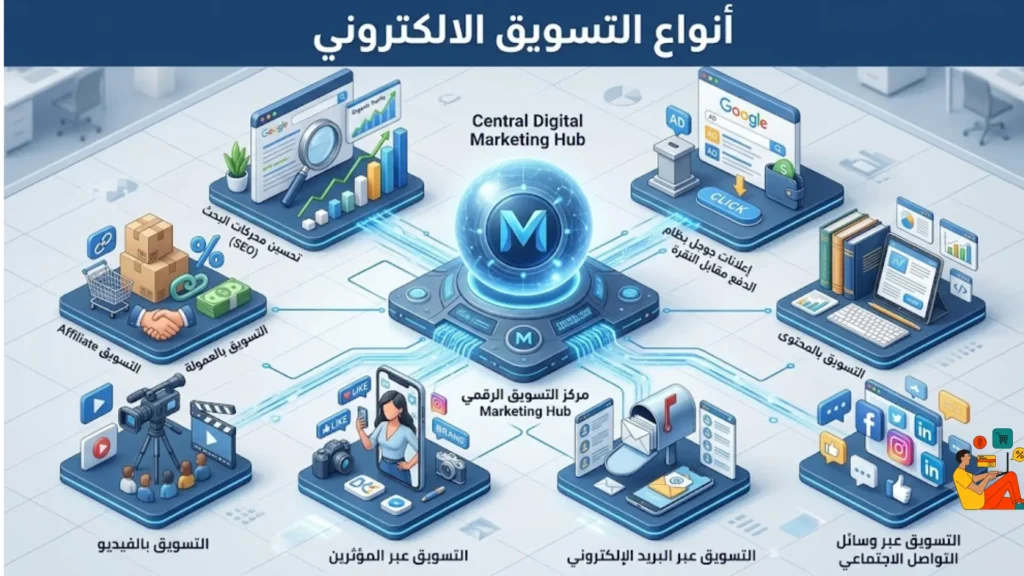
Key Types of Digital Marketing and How They Function
Search Engine Optimization (SEO)
SEO focuses on ranking your website in organic search results when potential clients search for industry terms on Google. It spans three core areas:
- On-Page SEO: Content quality, loading speed, and internal link structure.
- Off-Page SEO: Securing high-authority backlinks pointing to your domain.
- Technical SEO: Mobile responsiveness and clean code structure free from indexation errors.
While organic SEO delivers sustainable long-term authority within a digital marketing (3) roadmap, it typically requires 4 to 6 months before showing major results, making it less suitable for immediate short-term needs.
💻 Free Consultation |
Paid Advertising (PPC)
Paid channels include Google Search Ads and social media ads across Facebook, Instagram, and TikTok. The primary advantage is speed—generating initial leads within hours of launch. However, traffic ceases the moment budgets stop, unlike organic SEO whose momentum continues over time.
Crucially, ad performance depends heavily on landing page quality. Directing ad clicks to a generic homepage instead of a dedicated offer page wastes significant ad budget.
Content Marketing
Content marketing involves producing informative articles, videos, and guides that solve real audience problems rather than aggressively pitching features. For example, a dental clinic builds greater authority through an article comparing orthodontics types than a simple “Book Now” post. Useful content builds long-term trust and strengthens search visibility.
Social Media Marketing
Each platform requires a tailored content approach:
- Facebook: Effective for mature demographics, community discussions, and direct offers.
- Instagram: Ideal for high-impact visual brands and lifestyle products.
- TikTok: Best for short-form, authentic video content targeting younger audiences.
- LinkedIn: The premier network for professional services and B2B client acquisition.
In a comprehensive digital marketing (4) strategy, success on social platforms is measured by actual engagement and customer conversion rates rather than vanity follower counts.
Email Marketing
Email marketing continues to yield high ROI relative to cost. It serves to deliver personalized offers to existing customers or recover abandoned shopping carts. Personalization is key—addressing subscribers by name and recommending items based on purchase history yields far superior conversions compared to generic blasts.
Influencer Marketing
Influencer campaigns leverage trusted figures to promote services or products. Selection should align with audience interest relevance rather than follower volume alone; niche micro-influencer partnerships often drive higher conversion rates.
Video Marketing
Visual video assets generate higher engagement rates across major channels. Explainer videos, behind-the-scenes clips, and authentic customer testimonials build credibility far faster than static text banners.
Affiliate Marketing
Affiliate structures involve partnering with third-party promoters who earn commissions on completed sales. This performance-based model reduces upfront risk, making it particularly effective for e-commerce platforms.
Steps to Execute a Campaign from Scratch
- Audit the existing website or landing page to identify conversion bottlenecks.
- Define the ideal customer persona based on real data from past transactions.
- Select one or two core channels initially rather than spreading budgets thinly across all networks.
- Build a dedicated landing page for each campaign offer instead of routing traffic to the homepage.
- Launch a test campaign with a limited budget to validate messaging prior to scaling.
- Monitor performance metrics weekly and adjust targeting based on empirical data.
Common Mistakes That Waste Budgets
Executing digital marketing (5) without clear governance often leads to avoidable budget drain. Common pitfalls include:
- Running paid campaigns without defined audience parameters, displaying ads to irrelevant users.
- Focusing on vanity traffic numbers while ignoring the actual conversion rate.
- Cross-posting identical content across channels without adapting formats to each platform.
- Halting SEO initiatives after just one week due to expecting immediate results.
- Neglecting Customer Acquisition Cost (CAC) tracking, the single metric that determines profitability.
How to Measure Campaign Success

Key financial and performance metrics to track regularly include:
- Customer Acquisition Cost (CAC): Total marketing expenditure divided by the number of acquired paying clients.
- Conversion Rate: The percentage of site visitors who complete a purchase or contact form.
- Customer Lifetime Value (LTV): Total revenue generated by a single customer across their relationship with the brand.
- Retention Rate: Tracking repeat customer purchases to ensure product and acquisition alignment.
Current Trends in the Industry
Integrating AI solutions into audience data analysis and personalized messaging is now standard practice in modern digital marketing (6). Furthermore, search engines increasingly provide direct AI-generated answer summaries. This shift elevates the importance of content depth and authoritative sourcing over simple keyword repetition. Brands investing in well-researched content maintain organic visibility, whereas low-quality pages decline in rankings.
How to Choose the Right Agency Partner
Before hiring an agency to manage your digital marketing (7), evaluate them on these critical operational criteria:
- Do they build plans around clear numeric KPIs or rely on generic templates?
- Do they provide transparent performance reports detailing CAC and conversion rates?
- Do they have proven experience in your specific industry niche?
WebSoft adopts a data-driven approach to performance optimization rather than random ad spend, conducting individual business assessments before deploying customized growth strategies.
💻 Free Consultation |
Frequently Asked Questions
What initial budget is required to begin?
Budget requirements depend on industry competitiveness and market scope. Rather than total expenditure, allocating funds strategically across proven channels is what ensures profitability.
Can a business rely solely on SEO without paid ads?
Yes, though SEO requires a longer runway. Combining long-term organic SEO with targeted PPC ads provides a balanced acquisition model for most businesses.
What is the difference between online marketing and digital marketing?
In general usage, effective digital marketing (8) encompasses all web-based channels, social media networks, search platforms, and connected technology solutions.
How long does it take to see campaign results?
Paid campaigns generate initial leads within days, whereas inbound content strategies and SEO require several months to achieve stable organic positioning.
Is this approach suitable only for small businesses?
It is scalable for businesses of all sizes. Startups can launch with modest test budgets and scale investment as channel profitability is established.
Related Services
- Web Development and Digital Platforms
- Search Engine Optimization and Content Creation (SEO)
- Mobile App Development and Smart Solutions
- ERP Systems Development
- Artificial Intelligence Solutions and Digital Automation
- UI/UX Design for Intuitive Interfaces
Conclusion
Executing digital marketing (9) successfully requires an integrated system that connects customer insights with clear performance metrics. Profitability relies on understanding audience dynamics, choosing effective channels, and analyzing campaign data continuously. By grounding growth strategies in objective metrics, businesses turn promotion into a predictable, measurable investment.